Localize site content
    • About
    • History
    • Who was Vera Rubin?
      • Rubin in Chile
      • Cerro Pachón
      • Observatory Site Selection
      • Organization
      • Leadership
      • Science Collaborations
      • Departments and Teams
    • Funding Information
      • Work With Us
      • Jobs Board
    • Explore
    • Rubin Basics
      • How Rubin Works
      • Legacy Survey of Space and Time (LSST)
      • Rubin Technology
      • Alert Stream
      • Rubin Numbers
    • Science Goals
      • Skyviewer ↗
      • Skysynth: The cosmos captured by Rubin, for your ears
    • Orbitviewer ↗
    • Rubin Voices
    • Get Involved in Rubin Research
      • Activities, Games, and More
      • Space Surveyors Game
      • Animated Video Series
      • Rubin's 3200-Megapixel Group Photo
    • Gallery
      • Main Gallery
      • Featured Media
      • First Look
      • Graphics & Illustrations
      • Outreach & Education
    • Slideshows
    • Construction Archive Gallery
    • Media Use Policy
    • News
    • Press Releases
      • Rubin Observatory First Look
      • The Cosmic Treasure Chest
      • A Swarm of New Asteroids
      • Rhythms in the Stars
      • Trifid and Lagoon Nebulae
      • Rubin First Look Watch Parties
    • Media Resources
    • Press Releases
    • Name Guidelines
    • For Scientists
    • Get started
      • News, events, and deadlines
      • Rubin Science Assemblies
      • Rubin Data Academy
      • Rubin Community Workshop
      • Resources for scientists
      • Rubin Community Forum
      • Early Science Program
      • Workshops and seminars
      • Tutorials
      • LSST Discovery Alliance
      • Public outreach materials
      • For amateur astronomers
      • Survey, instruments, and telescopes
      • Key numbers
      • The Legacy Survey of Space and Time (LSST)
      • Instruments
      • Telescopes
      • Data products, pipelines, and services
      • Data Policy
      • Data access and analysis
      • Recent data releases
      • Alerts and brokers
      • Data processing pipelines
      • User-contributed resources
      • Future data products
      • Simulation software
      • Documentation and publications
      • Technical documentation
      • How to cite Rubin Observatory
      • Publication policies
      • Glossary & Acronyms
      • Papers citing Rubin Observatory
      • Science Collaborations
      • Galaxies Science Collaboration
      • Stars, Milky Way, and Local Volume Science Collaboration
      • Solar System Science Collaboration
      • Dark Energy Science Collaboration
      • Active Galactic Nuclei Science Collaboration
      • Transients and Variable Stars Science Collaboration
      • Strong Lensing Science Collaboration
      • Informatics and Statistics Science Collaboration
    • Citizen Science
      • Committees and teams
      • Science Advisory Committee (SAC)
      • Survey Cadence Optimization Committee (SCOC)
      • Users Committee
      • Target of Opportunity (ToO) Advisory Board
      • Resource Allocation Committee (RAC)
      • Community Science Team (CST)
      • Research Inclusion Working Group (RIWG)
      • Project Science Team (PST)
      • In Kind Program
      • Resources
      • In-Kind Program FAQs
      • Frequently Asked Questions
      • How to navigate this website
      • Code of Conduct
      • Interim CoC
    • Education
    • First Look Resources for Lasting Impact
    • Education FAQs
    • Educators
    • Glossary
    • Investigations
    • Calendar
Localize site content
  • Contact Us
  • Jobs Board
  • Intranet
  • Visual Identity Guide
  • Privacy Policy

The U.S. National Science Foundation (NSF) and the U.S. Department of Energy (DOE) Office of Science will support Rubin Observatory in its operations phase to carry out the Legacy Survey of Space and Time. They will also provide support for scientific research with the data. During operations, NSF funding is managed by the Association of Universities for Research in Astronomy (AURA) under a cooperative agreement with NSF, and DOE funding is managed by SLAC National Accelerator Laboratory (SLAC), under contract by DOE. Rubin Observatory is operated by NSF NOIRLab and SLAC.

NSF is an independent federal agency created by Congress in 1950 to promote the progress of science. NSF supports basic research and people to create knowledge that transforms the future.

The DOE Office of Science is the single largest supporter of basic research in the physical sciences in the United States and is working to address some of the most pressing challenges of our time.

Funding agency logos
Homepage

Let's Connect

  • Visit the Rubin Observatory on Facebook
  • Visit the Rubin Observatory on Instagram
  • Visit the Rubin Observatory on LinkedIn
  • Visit the Rubin Observatory on Twitter
  • Visit the Rubin Observatory on YouTube
    1. Rubin Voices
    2. Carlos Barría

    Unfortunately, there are no shortcuts to learning and growing.

    Carlos Barría

    he/him

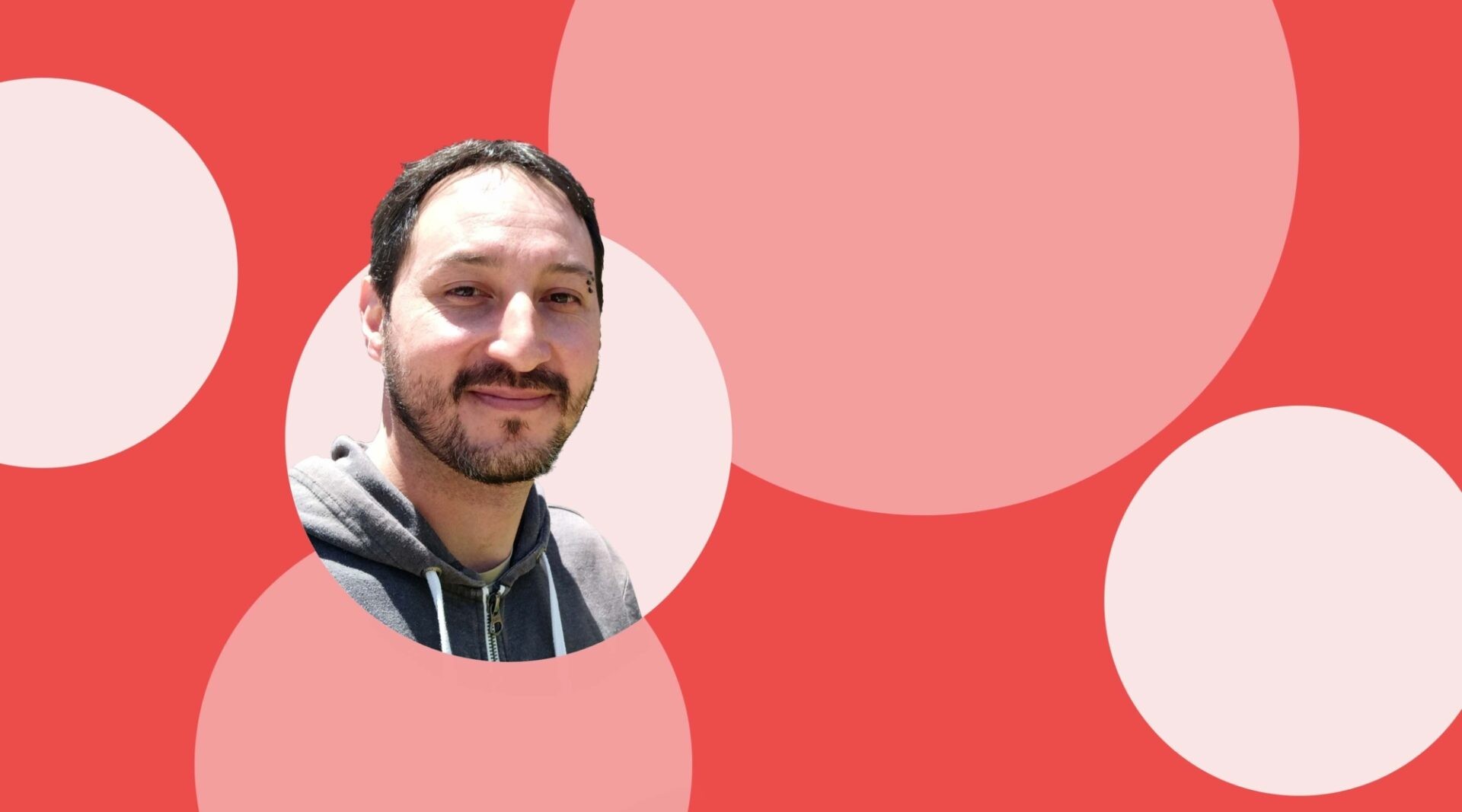
    Carlos Barría is a Chilean sound engineer who found his way to an optical astronomy observatory as a self-taught programmer, and is now in charge of the supercomputing servers that Rubin scientists use for research.

    Hear Carlos' name

    Highlights

    • He became interested in computers at an early age
    • Has repaired and upgraded an ATARI 800 XL
    • Invested seven years of his life into World of Warcraft

    How does a sound engineer end up at an optical astronomy observatory, working with a project focused on completely different sensory input? Meet Carlos Barría, a sound engineer turned supercomputer IT expert!

    To talk about Carlos's work, we need to explain Development Operations, or “DevOps.” In simple terms, DevOps is a new way for software and IT teams to design, build, and manage the development and release of software in an automated way, so that updates can be released more quickly and reliably. As a DevOps engineer for Rubin Observatory, Carlos helps maintain the servers and supercomputers that process Rubin data. As an analogy, if Rubin were a custom-built house, a DevOps team would do everything to make that house the best it could be: they would draw up the plans, build it, maintain it, and even help with any expansions needed. Essentially, it’s a more efficient way of working because instead of needing separate teams of architects and builders for each project, DevOps can do it all!

    The Rubin DevOps team doesn't build houses, but they do take care of the technology that functions as the “brain” of the observatory. Carlos is in charge of the servers that scientists use for research. “Just like home computers, we have to update the operating systems on the servers. I am responsible for updating the servers in the United States, located in Tucson, Arizona; and those in Chile, in La Serena,” he says.


    ‌
    “I believe that in IT it is very important that people have soft skills because the technical side you can learn, or there are manuals or procedures.”

    How did Carlos, a sound engineer, end up working at Rubin? It all started with early access to computers. “My father, who is a doctor, had access to a computer at his hospital that I used much more than he did,” Carlos says. His interest in computers grew so much that one of his school teachers began helping him after regular classes, at his home. “My family started getting excited about the idea of me becoming a computer scientist. But when I studied it formally, I got very bored because while I already knew how to program in 'C' or databases, the teachers were teaching Excel or Word.” Carlos left formal computer science studies to pursue another field that combined many of his interests. “Someone recommended I look for something that satisfied my interest in music — specifically the guitar — computers, and electronics,” he says. “And then they mentioned sound engineering.”

    Carlos worked in sound engineering for a while and even founded his own audio company with a colleague — all while continuing to study computer science independently. But jobs in audio became scarce, so Carlos decided to try something new. “Since I knew about sound and video,” says Carlos, “I worked in marketing for an internet services company. There, I quickly started creating software to make my job easier and automated.” He then took a job as a television support engineer. “I was one of only five people in Chile who held that position,” he recalls.

    ‌
    “Here [at Rubin], they encourage you to find solutions that are new, hopefully, Open Source (so that the knowledge is open), and that has been great because it guarantees unlimited growth in the end.”

    Six years later, an astronomer friend mentioned an open position at Rubin. “I applied without high expectations.” says Carlos, “but I did it anyway.” And since he likes challenges, he did it while organizing his wedding. After Carlos successfully passed a series of tests, and demonstrated that he was the best fit for the position, the DevOps team was also pleasantly surprised to discover that Carlos is a fan of heavy metal, video games, and anime (like several others on the DevOps team).

    “Rubin feels like a new family to me,” says Carlos. “I have found colleagues with whom I identify a lot because, apart from sharing passions, hobbies, and similar personal stories, we spend time outside of work, travel together, and share with our families.

    ‌
    “Unfortunately, there are no shortcuts. To learn things and become good at them, one has to spend the hours there. This means that you have to practice, study, and look at the manual. There’s no way to do it in less time than it needs to.”

    Lightning round Q&A: Get to know Carlos better!

    What is your most used emoji?

    I like using the hand emoji that says OK (👌) to add expressiveness to things that are good. I have slowly been popularizing it at work!


    Would you go to space?

    Definitely, yes. It must be the best thing that could exist. Hopefully, there will soon be commercial trips to go there.


    What food could you eat for a week straight?

    Chinese food (the kind we have in Chile), because the dishes are adapted to the local culture. Rice with Mongolian beef or chicken are my favorites.

    If you could live in any fictional universe, which would it be?

    I would be a paladin in World of Warcraft because I invested seven years of my life in it!

    Trading card

    Tags

    • #DevOps
    • #Ingeniero
    • #Engineer
    • #Supercomputer
    • #Supercomputadoras
    • #Chileno
    • #Chilean

    Browse More Profiles

    Loading the Rubin Voices...
    Go Back to Profiles