
Cosmic Surprises: Rubin’s Target of Opportunity Program
NSF–DOE Vera C. Rubin Observatory spends most of its nights carrying out a carefully planned sky survey. The observing strategy is laid out in advance — where the telescope points, how long each exposure lasts, and how often each part of the sky gets revisited. That plan didn’t come together overnight, it took years to develop with input from scientists across many areas of astronomy and astrophysics. The overall goal for the main survey cadence is simple: get the most science possible out of every night Rubin observes.
But every now and then, the Universe sends out an unusual flare — a signal that something rare, brief, and scientifically valuable is happening now. When that happens, Rubin may temporarily pause its normal cadence and swing into action on what’s called a Target of Opportunity, or ToO.
A ToO usually starts with an external trigger, some kind of astrophysical signature picked up by another facility. Gravitational-wave detectors (like the LIGO-Virgo-KAGRA network), neutrino observatories like IceCube, and several other observatories send out alerts when they detect something unusual. These alerts come with varying levels of precision, but often the source’s position on the sky is poorly localized — it’s like being handed a map with a big, blurry circle on it and told, “it came from somewhere in here.”
Rubin Observatory is especially well suited to jump in on these kinds of cosmic hunts. Its large field of view and ability to quickly scan large areas make it one of the few observatories capable of searching a broad area of sky before the event fades. By efficiently gathering deep, detailed images of that region, Rubin data can help identify possible sources — sometimes even early enough for other telescopes to zoom in and help gather more data.
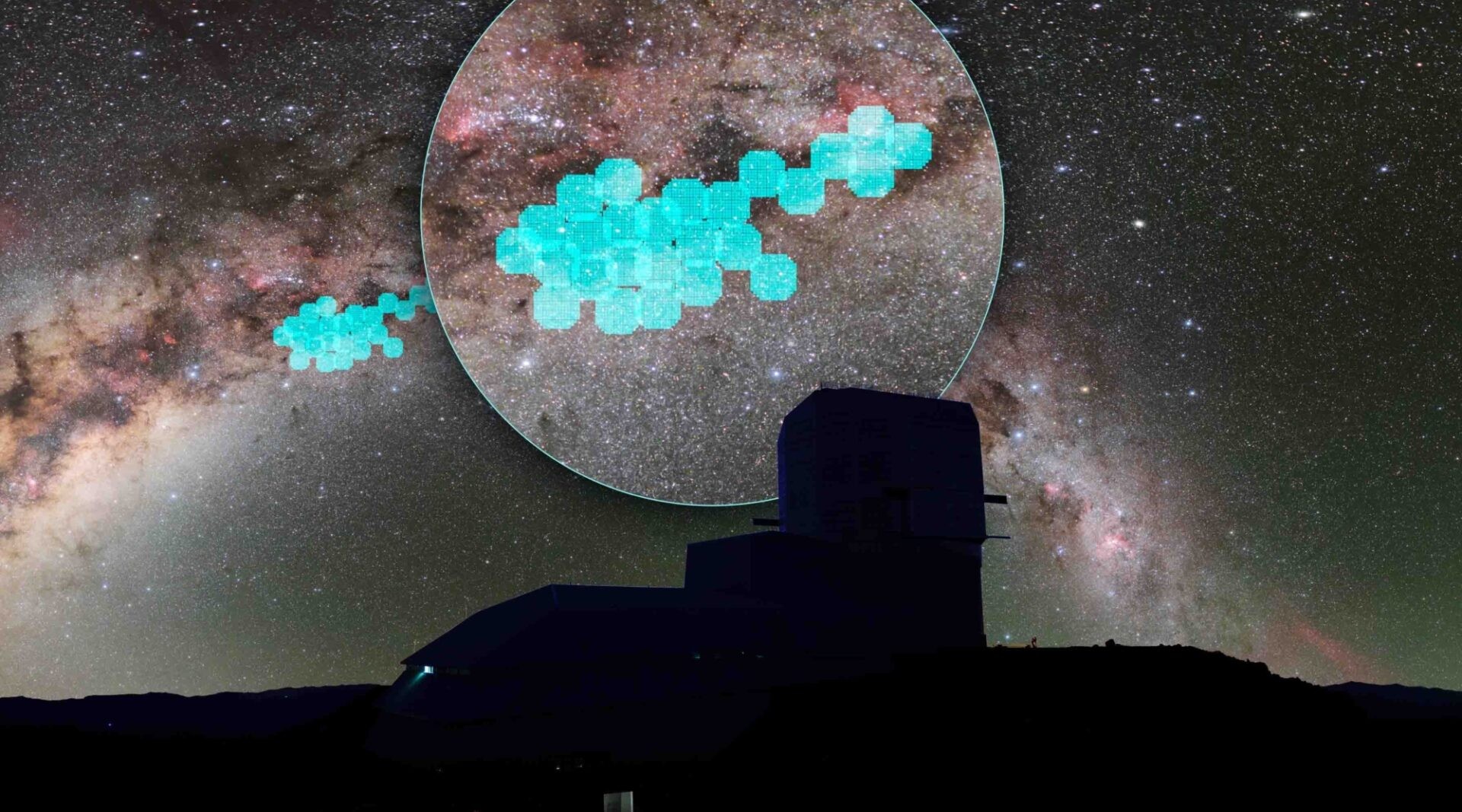
For Rubin, ToOs are reserved for events where Rubin’s unique combination of depth, speed, and wide field of view is essential. If scientists decide an alert is worth the interruption, Rubin pauses its survey and slews to the area where the source might be to image the entire region patch by patch. This is where Rubin’s combination of a sensitive camera and enormous field of view really shines. Few optical observatories can cover large areas of sky so quickly and with as much depth as Rubin can.
Of course, taking the images is just the first step. Next comes the task of finding the one special source hidden among thousands of new or changing sources. During normal operations, Rubin produces a firehose of near-real-time alerts, flagging every object that has changed since the last visit. ToOs call for a more intentional approach: identifying the specific signal linked to the external trigger. That might mean hunting for a kilonova, a sudden flare in a distant galaxy, or a small moving asteroid with the potential to impact Earth. It’s a tougher, more focused search that requires extra processing and careful scrutiny, like sifting through an enormous haystack to find the needle hiding inside.
As Rubin Observatory gets its survey underway, the Target of Opportunity option adds an important layer of flexibility. Rubin’s steady sky coverage — combined with its ability to respond quickly — means scientists can study rare, fast-evolving phenomena in a whole new way.
Bringing the night sky to life
Rubin's 10-year survey, called the Legacy Survey of Space and Time (LSST), will capture the southern sky in extraordinary detail, building the most complete time-lapse of the cosmos ever created.
Science goals
Discover the key science areas where Rubin Observatory will advance astronomy and astrophysics.