
Alerts
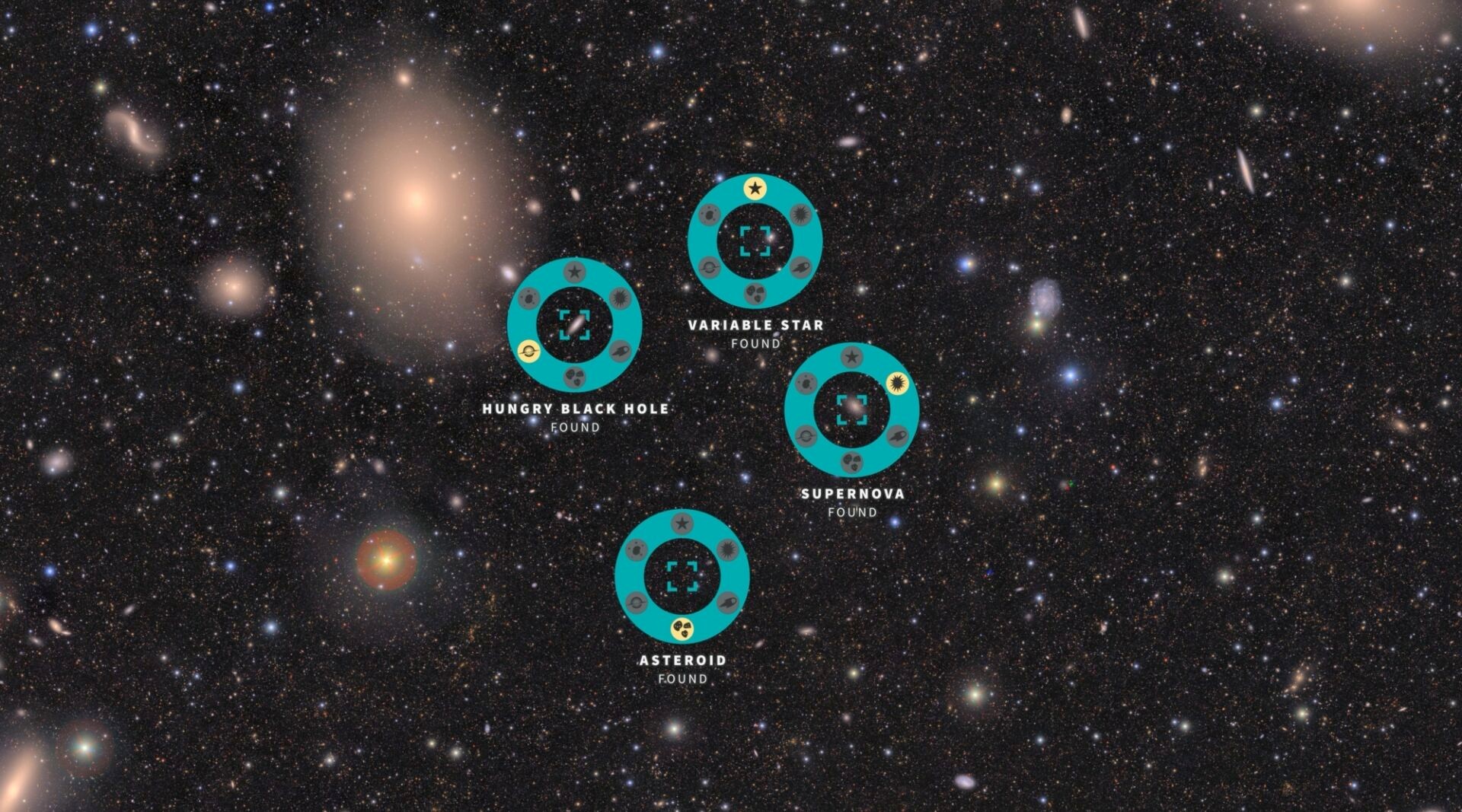
How do Rubin alerts work? You can think of Rubin Observatory like a friend who’s constantly scrolling through the Universe’s social media feed. Every minute or so, they refresh and see what’s new — a star explodes in a distant galaxy, an asteroid moves across the sky, a nearby star pulses and changes in brightness. Instead of keeping it to themselves, your friend immediately posts a notification: “Something changed here!” That notification is the alert.
But here’s the thing: Rubin is a very committed friend, and there’s a lot going on in space. They don’t just post a few notifications, they send millions every night. Imagine your phone buzzing nonstop, with literally thousands of messages each minute. You couldn’t keep up with all the action!
That’s where Rubin’s alert brokers come in. These software systems receive and process the alerts, adding more information for each one. This includes determining what kind of object triggered the alert, matching an alert with existing observations (or maybe it's a new discovery!) and helping to prioritize which objects are most interesting to follow-up on. So if you’re working with Rubin data, you can use tools provided by the brokers to search for the specific objects you’re interested in, and that way you don’t drown in the full firehose of alerts! Instead, you can build a feed that matches your interests — the cosmic equivalent of following certain hashtags or channels.
Explore more:
Learn more about Rubin alerts at rubinobservatory.org
Watch a video about Rubin’s process for identifying changes in the sky
See what kinds of of things trigger alerts in this infographic
Rubin sent out its first world-public alerts in February 2026 — read the press release