Homepage
Localize site content
    • About
    • History
    • Who was Vera Rubin?
      • Rubin in Chile
      • Cerro Pachón
      • Observatory Site Selection
      • Organization
      • Leadership
      • Science Collaborations
    • Funding Information
      • Work With Us
      • Jobs Board
    • Explore
    • Rubin Basics
    • Science Goals
      • How Rubin Works
      • Legacy Survey of Space and Time (LSST)
      • Rubin Technology
      • Alert Stream
      • Rubin Numbers
    • Rubin Voices
      • Skyviewer ↗
      • Skysynth: The cosmos captured by Rubin, for your ears
    • Orbitviewer ↗
    • Get Involved in Rubin Research
      • Activities, Games, and More
      • Space Surveyors Game
      • Animated Video Series
    • Gallery
      • Main Gallery
      • Featured Media
      • News Gallery
      • First Look
      • Graphics & Illustrations
      • Outreach & Education
      • Image Releases
      • Rubin's COSMOS
      • Rubin's Ocean of Stars
      • Rubin Observatory First Look
    • Slideshows
    • Construction Archive Gallery
    • Media Use Policy
    • News
    • Press Releases
    • Media Resources
    • Press Releases
    • Name Guidelines
    • For Scientists
    • Get started
      • News, events, and deadlines
      • Rubin Science Assemblies
      • Rubin Data Academy
      • Rubin Community Workshop
      • Resources for scientists
      • Rubin Community Forum
      • Early Science Program
      • Workshops and seminars
      • Tutorials
      • Additional compute resources
      • Gemini time for alert follow-up
      • LSST Discovery Alliance
      • Public outreach materials
      • For amateur astronomers
      • Survey, instruments, and telescopes
      • Key numbers
      • Live status
      • The Legacy Survey of Space and Time (LSST)
      • Instruments
      • Telescopes
      • Data products, pipelines, and services
      • Data Policy
      • Data access and analysis
      • Recent data releases
      • Alerts and brokers
      • Data processing pipelines
      • User-contributed resources
      • Future data products
      • Simulation software
      • Documentation and publications
      • Technical documentation
      • How to cite Rubin Observatory
      • Publication policies
      • Glossary & Acronyms
      • Papers citing Rubin Observatory
      • Science Collaborations
      • Galaxies Science Collaboration
      • Stars, Milky Way, and Local Volume Science Collaboration
      • Solar System Science Collaboration
      • Dark Energy Science Collaboration
      • Active Galactic Nuclei Science Collaboration
      • Transients and Variable Stars Science Collaboration
      • Strong Lensing Science Collaboration
      • Informatics and Statistics Science Collaboration
    • Citizen Science
      • Committees and teams
      • Science Advisory Committee (SAC)
      • Survey Cadence Optimization Committee (SCOC)
      • Users Committee
      • Target of Opportunity (ToO) Advisory Board
      • Resource Allocation Committee (RAC)
      • Community Science Team (CST)
      • Research Inclusion Working Group (RIWG)
      • Project Science Team (PST)
      • In Kind Program
      • In-Kind Program FAQs
      • Frequently Asked Questions
      • Impacts from artificial satellites and debris
      • How to navigate this website
      • Code of Conduct
      • Interim CoC
    • Education
    • First Look Resources for Lasting Impact
    • Education FAQs
    • Educators
    • Glossary
    • Investigations
    • Calendar
Localize site content
  • Contact Us
  • Jobs Board
  • Intranet
  • Visual Identity Guide
  • Privacy Policy

The U.S. National Science Foundation (NSF) and the U.S. Department of Energy (DOE) Office of Science will support Rubin Observatory in its operations phase to carry out the Legacy Survey of Space and Time. They will also provide support for scientific research with the data. During operations, NSF funding is managed by the Association of Universities for Research in Astronomy (AURA) under a cooperative agreement with NSF, and DOE funding is managed by SLAC National Accelerator Laboratory (SLAC), under contract by DOE. Rubin Observatory is operated by NSF NOIRLab and SLAC.

NSF is an independent federal agency created by Congress in 1950 to promote the progress of science. NSF supports basic research and people to create knowledge that transforms the future.

The DOE Office of Science is the single largest supporter of basic research in the physical sciences in the United States and is working to address some of the most pressing challenges of our time.

Funding agency logos

Let's Connect

  • Visit the Rubin Observatory on Facebook
  • Visit the Rubin Observatory on Instagram
  • Visit the Rubin Observatory on LinkedIn
  • Visit the Rubin Observatory on Twitter
  • Visit the Rubin Observatory on YouTube
    1. Explore
    2. Rubin Basics
    3. Data Releases

    Media

    Tags

    • #data
    • #science

    Related Rubin Basics Posts

    Loading the Rubin Basics...
    Go Back to Rubin Basics Posts
    Cutout from Rubin's COSMOS
    Cutout from Rubin's COSMOS

    Data Releases

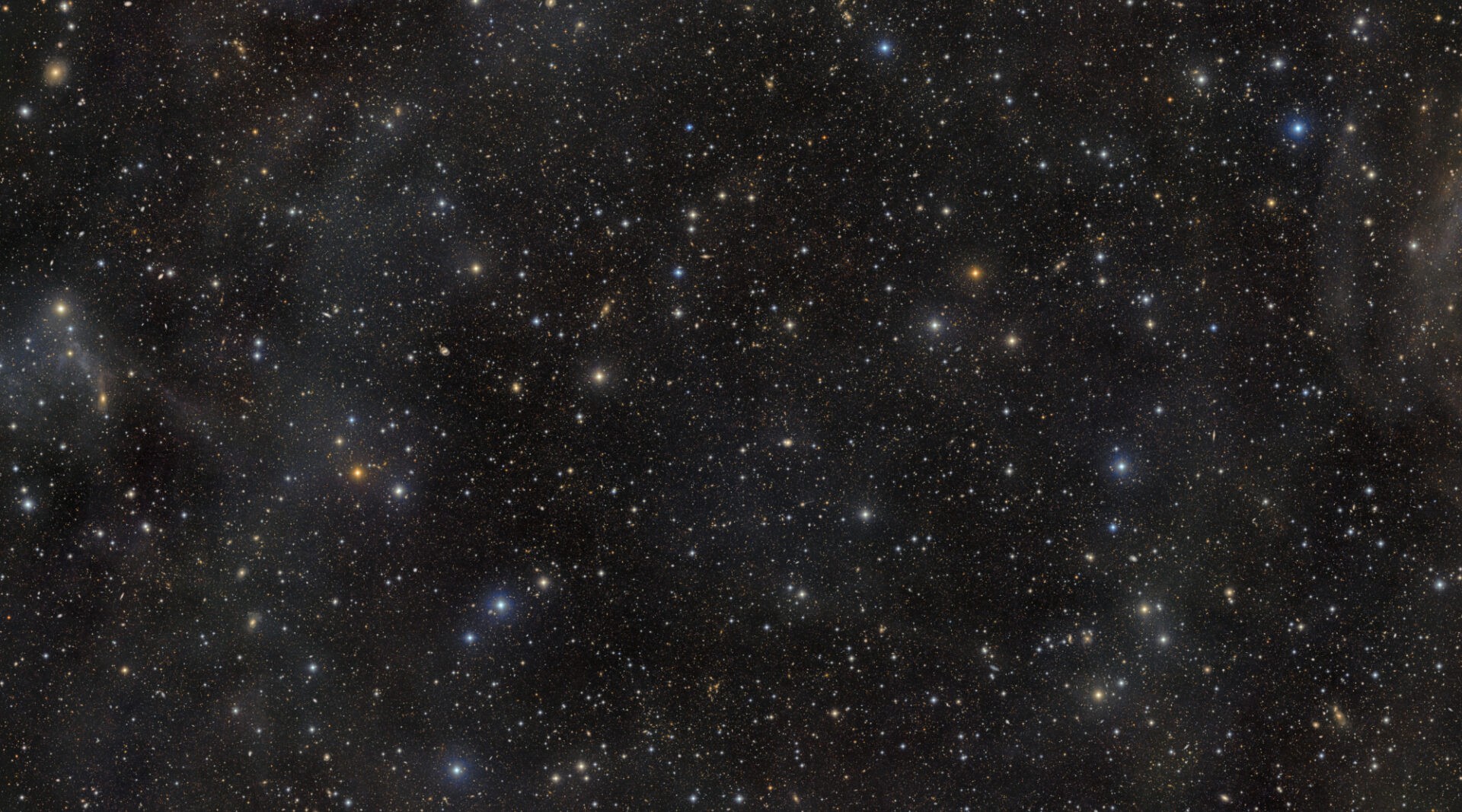
    The COSMOS image is part of a new data set released by Rubin. What does this data drop mean for scientists?

    I heard some new Rubin data just got released. What’s the significance?

    It’s true, Rubin Observatory recently placed an exciting new dataset in the hands of eager scientists around the world! This is the first large collection of science-ready data from the LSST Camera. It includes tens of thousands of images as well as catalogs of objects built from observations taken before the Legacy Survey of Space and Time (LSST) officially began. For scientists who have spent years preparing for Rubin, this is the moment they can finally dig into Rubin data on a large scale.

    How was this data set created?

    Creating a data release like this is no small task. After this set of observations was collected (April 20, 2025 - January 1, 2026) Rubin’s data management team spent months processing the data into science-ready products. Individual exposures were carefully calibrated and combined into deep, coadded images, while catalogs of detected astronomical objects were generated to support a wide range of scientific investigations.

    ‌

    Who can use the data?

    This data set is now available to professional researchers in the United States and Chile, as well as scientists at institutions around the world who are part of Rubin’s international in-kind program. Scientists access the data via the cloud-based Rubin Science Platform, where they can analyze data without having to download it.

    Are data releases the only way Rubin serves data to scientists?

    No — although this data release offers scientists a powerful new resource, it’s not the only data researchers can access. Every night, Rubin continues to produce alerts as it scans the sky, rapidly identifying changes like moving asteroids, flickering stars, supernovae, feeding black holes, and more. These alerts require a different type of processing than the deep image and catalog products of a data release. Speed matters for detecting changes in the cosmos, so the alerts are generated in near-real-time and served to the science community by Rubin’s alert brokers within just a few minutes.

    Throughout the 10-year Legacy Survey of Space and Time, Rubin will continue producing these two complementary types of data: rapid alerts for events that need quick attention and possible follow-up activities, and periodic data releases that provide deeper and deeper views of the sky. Together they enable scientists to investigate a broad range of science questions, from the movement of nearby objects in our Solar System to the evolution of galaxies across cosmic time. By serving several kinds of science at the same time, Rubin will enable countless discoveries over the next decade, all from a single survey of the sky.

    Explore more:

    • Check out Rubin’s COSMOS web page

    • Explore another image from the recently released data: Ocean of Stars

    • Learn more about how Rubin collects, processes, and distributes data

    • Find out more about Rubin alerts

    Cutout from Rubin's COSMOS
    Cutout from Rubin's COSMOS